Understanding Robotic Knee Surgery
A patient-friendly guide to robotic-assisted knee replacement—what it is, how it works, and why it may be the right choice for you.
What Is Robotic Knee Replacement?
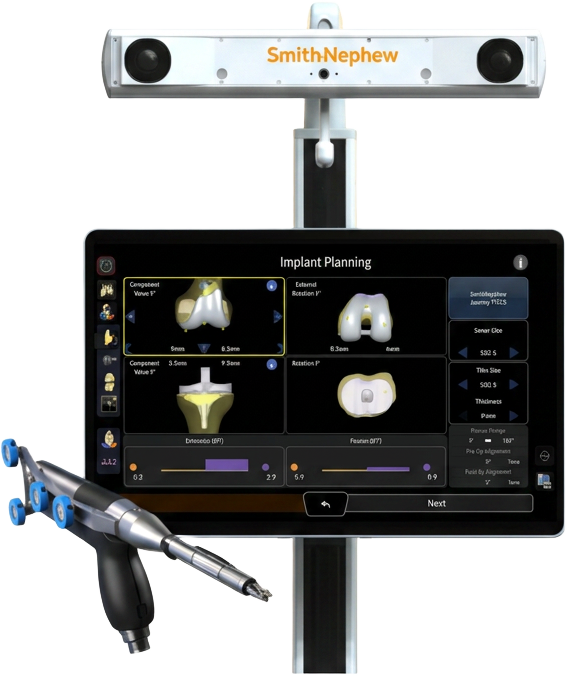
Robotic knee replacement is an advanced surgical approach that combines the skill of an experienced surgeon with the precision of robotic technology. Unlike traditional surgery, where the surgeon relies on manual techniques and visual estimation, robotic surgery uses a sophisticated system to create a detailed 3D map of your knee.
Think of it like this: just as GPS helps a driver navigate with precision, the robotic system guides your surgeon's instruments with sub-millimeter accuracy. But just like GPS doesn't drive the car, the robot doesn't perform the surgery—your surgeon does, with enhanced precision and real-time feedback.
Your surgeon is always in complete control. The robot is a precision tool, not the operator.
Benefits of Robotic Knee Surgery
For patients and their families, robotic surgery offers meaningful advantages over traditional techniques.
View the clinical evidencePrecision Implant Positioning
The robotic system maps your knee in 3D, allowing sub-millimeter accuracy in implant placement for a more natural-feeling knee.
Reduced Post-Operative Pain
Smaller incisions and precise bone preparation mean less trauma to surrounding tissue, resulting in significantly less pain.
Faster Recovery Timeline
Many patients begin walking on the same day of surgery and return to normal activities weeks earlier than traditional surgery.
Smaller Incision
A minimally invasive approach means smaller scars and reduced risk of complications.
Personalized to Your Anatomy
Real-time imaging allows the surgeon to customize the implant position specifically for your unique knee structure.
Peace of Mind for Families
Shorter hospital stays and faster recovery mean your loved one is back home and active sooner.
What to Expect: Step by Step
Initial Consultation
Meet with your surgeon to discuss your symptoms, review imaging, and determine if robotic surgery is right for you.
Pre-Surgery Planning
Unlike traditional CT-based systems, CORI creates a real-time 3D model of your knee in the operating room—no separate CT scan required.
Robotic-Assisted Surgery
During surgery, the robot provides real-time guidance while your surgeon remains in complete control, ensuring optimal precision.
Recovery & Rehabilitation
Physical therapy begins quickly, with most patients walking the same day. Our team supports you through every step of recovery.
Frequently Asked Questions
Is robotic knee surgery available in Pakistan?
Yes. The CORI Surgical System by Smith+Nephew is now available in Pakistan. Ask your orthopaedic surgeon whether CORI robotic knee surgery is available at their hospital.
How much does robotic knee surgery cost in Pakistan?
The cost varies depending on the hospital, implant type, and your individual clinical needs. Ask your orthopaedic surgeon for a detailed estimate based on your specific situation.
What is robotic knee surgery?
Robotic knee surgery uses a surgeon-controlled robotic system to perform knee replacement with greater precision than traditional methods. The CORI system by Smith+Nephew creates a real-time 3D map of your knee and guides the surgeon to within sub-millimeter accuracy.
Who is a candidate for robotic knee replacement?
Patients suffering from knee osteoarthritis, chronic knee pain, or limited mobility who have not responded to conservative treatments may be candidates. Both partial and total knee replacement can be performed using the CORI system. Consult your orthopaedic surgeon for a personal assessment.
How is CORI different from traditional knee replacement?
Traditional knee replacement relies on manual measurements and standard instruments. CORI uses real-time digital mapping and robotic guidance to achieve alignment accuracy within 1° of the surgical plan — significantly reducing the risk of malalignment and improving long-term implant survival.
How long is recovery after robotic knee surgery?
Many patients are able to walk within 24 hours and return to light activity within 4–6 weeks. Return to sports or high-activity levels typically occurs within 4–5 months — more than 50% faster than conventional knee replacement.
Is the robot performing the surgery?
No. Your surgeon is always in complete control. The robot is a sophisticated tool that provides real-time guidance and data, helping the surgeon achieve greater precision than traditional techniques. Think of it as GPS for surgery—it guides the way, but your expert surgeon is driving.
Is robotic knee surgery safe?
Yes. Robotic-assisted surgery has been performed safely on hundreds of thousands of patients worldwide. The technology adds precision while maintaining the same safety protocols as traditional surgery. In fact, the enhanced accuracy may reduce certain complications.
How long does the surgery take?
The surgery typically takes between 1-2 hours, similar to traditional knee replacement. The robotic technology is integrated smoothly into the procedure without significantly extending surgical time.
Still Have Questions?
Our team is here to provide personalized answers during your consultation.